Silver Screen Library
The Girl from Devil's Lake by J. A. Jance - Review

Follow Us:






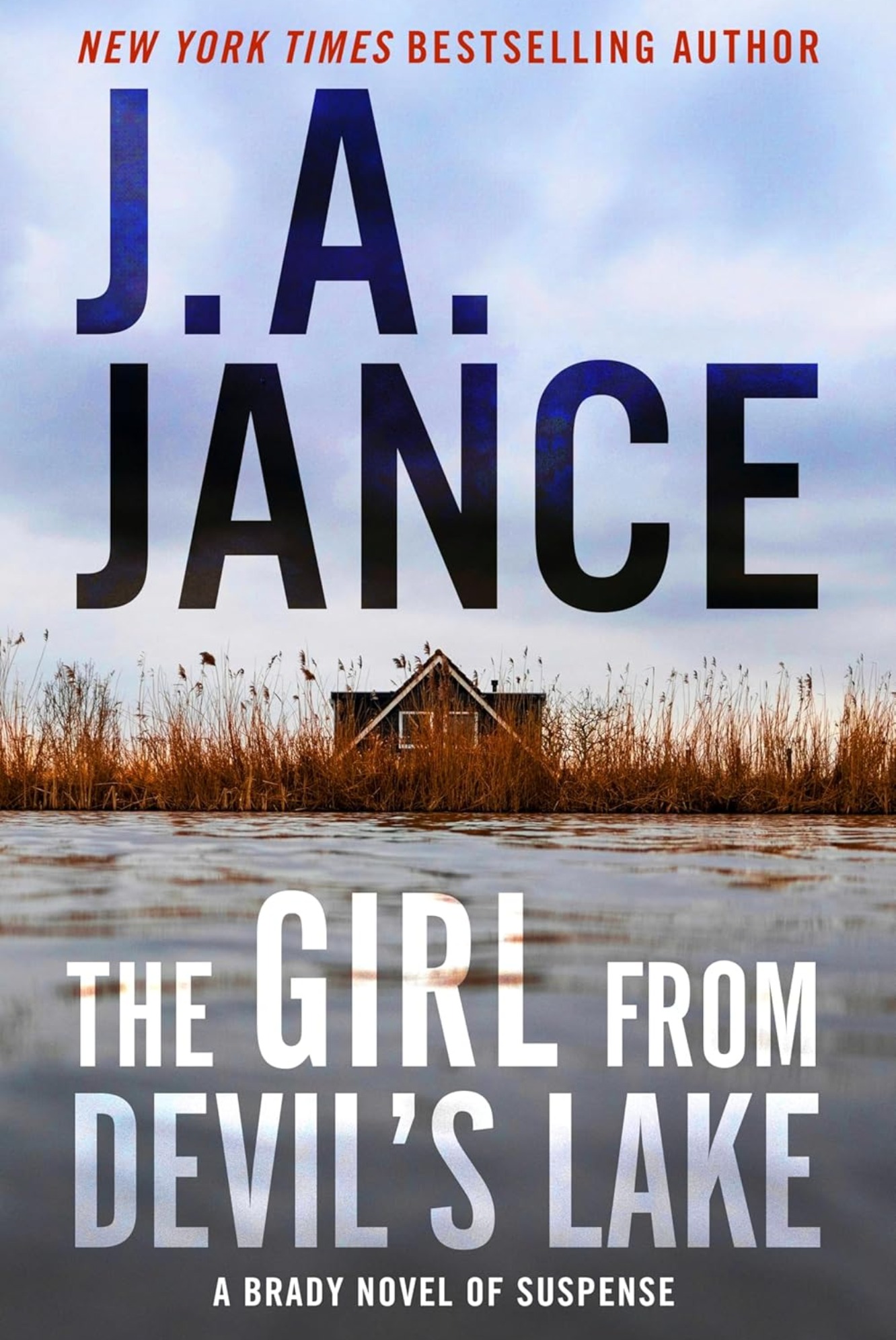
True crime buffs have a fascination with serial killers, dating back to Jack the Ripper in Victorian London. Tod Bundy and Jeffrey Dahmer are household names, as is David Berkowitz under his well-known alias of “Son of Sam.” Author J. A. Jance, who has written over 50 crime novels, has a similar fascination dating from a real-life encounter her husband had with a serial killer decades ago. Jance helped the police catch that killer. Since then, she has extensively researched serial killers, and the results often show up in her crime novels. Jance’s protagonists have captured numerous such killers over the years. However, none of these murderers has been as prolific or longstanding as Stephen Roper, the villain in Jance’s recent novel, The Girl from Devil’s Lake. The book is an excellent procedural that, through a fictional setting, illustrates how these murderers can evade detection for years and, more importantly, how the police eventually bring them down.
The Girl from Devil’s Lake is the author’s 21st novel featuring Joanna Brady, the longtime sheriff of Cochise County, AZ, on the Mexican border. As the book begins, Brady and her department investigate the murder of a four-year-old boy whose body was
found among debris in the nearby San Pedro River. Brady soon determines that the boy was Mexican and had disappeared a few days earlier. Fortunately, Brady is on friendly terms with the local Mexican authorities, with whom she teams up to work on the case.
What Brady doesn’t know, but readers can easily guess, is that the murderer is Stephen Roper. The author introduces Roper in a prologue in which, at 11 in Minnesota in 1956, he murders his step-grandmother, making the crime look like an accident. From that point, the book proceeds in dual timelines, with alternating chapters describing Brady’s investigation and Roper’s lengthy murderous history. As an adult, Roper became a teacher, which allowed him to travel across the country during the summer months, killing people in multiple jurisdictions nationwide. Eventually, he moved to Bisbee, where he hid in plain sight, becoming a career high school teacher for several decades. Ironically, he was Brady’s high school English teacher, a fact both of them remember.
The author incorporates large amounts of information about serial killers into The Girl from Devil’s Lake without the novel ever sounding like an information dump. Roper hears voices in his head, including Sherlock Holmes, who advises him on avoiding detection as he commits his crimes. The author wisely avoids including the actual words spoken by the voices, which might have sounded ridiculous. Over the course of the book, the picture emerges of Roper as a man who successfully maintained a low profile for decades while meticulously planning his crimes and keeping “trophies” from his victims. Roper becomes a thoroughly repellent but compelling character.
Because many series readers have gotten to know Joanna Brady over the years, the author spends less time on her background. Her daughter has now followed her into law enforcement, becoming a deputy in her own right and getting engaged. The murder investigation takes place while Brady and her daughter are planning the wedding. Many authors would have spent a lot of time discussing the wedding plans and turning Brady’s multitasking into a significant plot point. In The Girl from Devil’s Lake, the investigation is always paramount, and the author keeps potentially distracting subplots to a minimum.
Readers accustomed to massive task forces being assembled to investigate major crimes, followed by a slow, meticulous investigation, will find “The Girl from Devil’s Lake” somewhat hard to believe. Brady works on the case with the usual resources at her disposal, although she’s able to bring in some outside help. The author had to cut some corners here, much like TV shows streamline investigations to fit a 60-minute time frame rather than the days or weeks it takes in real life. I found this convenient condensing of what would occur in an actual investigation, a slightly annoying but acceptable plot compromise. A more realistic, 700-page novel wouldn’t have been as effective.
Once Brady suspects Roper of killing the four-year-old boy, she sends out notifications nationwide to other police departments asking for information about similar unsolved crimes. She is surprised to learn how many police officers , active and retired, remember the cold cases they couldn’t solve, even those decades old. This came as a surprise to me as well, and the author incorporates some of those reminiscences into a powerful finale. The title character in The Girl from Devil’s Lake was one of Roper’s first victims, killed over half a century earlier. The information Brady receives regarding that case provides some significant clues for her investigation.
When I read The Girl from Devil’s Lake, I felt as if I were reading a true crime memoir instead of a novel. I mean that as a compliment. Those looking for further developments in Joanna Brady’s personal storyline may be disappointed. The author develops her character through her actions and reactions as the case progresses. However, readers do learn much about Stephen Roper’s twisted psyche. From what I’ve read about other serial killers, Roper seemed chillingly like many of them, albeit being more successful in eluding capture for decades. I felt the author could have added more detail to the investigation, which at times seemed to progress too neatly. However, The Girl from Devil’s Lake is a book that both true-crime and police-thriller fans will thoroughly enjoy.
NOTE: The publisher graciously provided me with a copy of this book through NetGalley. However, the decision to review the book and the contents of this review are entirely my own.
In this clip, author J. A. Jance discusses The Girl from Devil's Lake with Dan White on the Out with Dan podcast:
Read other reviews of The Girl from Devil's Lake:
J. A. Jance is the New York Times best-selling author of almost 50 contemporary mysteries in four different series. She started writing in March, 1982. Her first book was a slightly fictionalized version of a series of murders in Tucson, AZ and was over 1200 pages long and was never published.Her agent thought Jance was a better writer of fiction and suggested she write a novel instead.
The result of that conversation was the first Detective Beaumont book, Until Proven Guilty, published in 1985. Since then, there have been 26 more Beaumont books. Jance's work also includes 21 Joana Brady books set in southeastern Arizona where she grew up, 17 Ali Reynolds books set in Sedona, AZ, and six novellas. The Walker Family series includes six thrillers, starting with Hour of the Hunter and Kiss of the Bees, that reflect what Jance learned during the years when she was teaching on the Tohono O'Odham reservation west of Tucson, AZ. She now lives in Tucson and Seattle, WA.
Buy other books by J. A. Jance on Amazon:

Header Photo: "Riot Radio" by Arielle Calderon / Flickr / CC By / Cropped
Silver Screen Video Banner Photos: pedrojperez / Morguefile; wintersixfour / Morguefile
Join Button: "Film Element" by Stockphotosforfree
Twitter Icon: "Twitter Icon" by Freepik
Facebook Icon: "Facebook Icon" by Freepik
LinkedIn Icon: "LinkedIn Icon" by Fathema Khanom / Freepik
Goodreads Icon: "Letter G Icon" by arnikahossain / Freepik
Certain images on this site appear courtesy of Amazon.com and other sponsors of Silver Screen Videos for the purpose of advertising products on those sites. Silver Screen Videos earns commissions from purchases on those sites.
© 2026 Steven R. Silver. All rights reserved.
